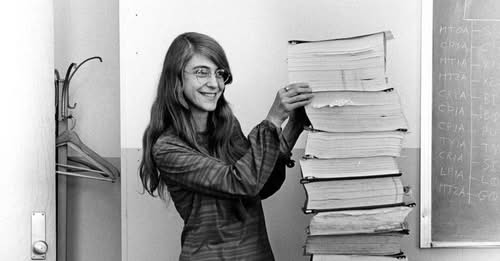
Margaret Hamilton Obituary: Apollo Software Pioneer Who Helped Guide Moon Landings Dies at 90
Margaret Hamilton, the pioneering computer scientist who led the team responsible for the onboard flight software used during NASA’s Apollo missions, has died at the age of 90.
Hamilton died on September 30, 2026, according to the Massachusetts Institute of Technology, where she spent more than two decades developing some of the foundational software systems that helped send humans to the Moon.
Her work became particularly important during Apollo 11, the historic 1969 mission that carried Neil Armstrong and Buzz Aldrin to the lunar surface. In the moments before the lunar module landed, the Apollo Guidance Computer issued a series of alarms after becoming overloaded. Hamilton’s team had designed the software with priority-driven processing that allowed critical tasks to continue while less important operations were set aside. The system successfully supported the landing.
Hamilton joined MIT’s Instrumentation Laboratory in the 1960s and eventually led the Software Engineering Division responsible for Apollo’s onboard flight software. By 1968, more than 400 people were working on Apollo software under the broader effort she helped lead. Her pioneering approach also helped establish “software engineering” as a recognized discipline.
Born in Paoli, Indiana, in 1936, Hamilton studied mathematics at Earlham College before beginning her programming career at MIT. She later founded technology companies and continued developing systems focused on reliability and error prevention.
Her contributions received widespread recognition, including the Presidential Medal of Freedom in 2016. She was also honored by the Computer History Museum and inducted into the National Aviation Hall of Fame.
Hamilton is survived by her daughter Lauren Hamilton, son-in-law Richard Selesnick, two grandsons and four great-grandchildren. MIT said a memorial service will take place in Cambridge, Massachusetts, in the spring.
Her death marks the passing of one of the most influential figures in the history of software and space exploration, whose work helped make one of humanity’s greatest technological achievements possible.
Leave a Reply